I will guide you through the essential customs regulations for Aruba to ensure your entry into this Caribbean paradise is smooth and hassle-free. Aruba allows travelers 16+ to bring duty-free: 1 liter of spirits OR 2.25 liters of wine OR 3 liters of beer, plus 200 cigarettes OR 50 cigars OR 250g tobacco, and personal goods worth up to AWG 400 ($230 USD). The country strictly prohibits single-use plastics, oxybenzone sunscreen, firearms, narcotics, and removal of coral/seashells, with violations resulting in confiscation, fines, or prosecution.
What Are the Aruba Customs Regulations for Travelers?
The Department of Customs (Douane) inspects all arriving travelers’ luggage to enforce import laws protecting Aruba’s borders, economy, and ecosystem. Officers distinguish between tax-free personal effects and commercial goods or items exceeding duty-free limits. Non-compliance results in fines or confiscation, regardless of whether you are a tourist, resident, or business traveler.
What Items Qualify for Duty-Free Import?
Travelers 16+ receive specific duty-free exemptions for personal-use items. Keep receipts as customs officers may request proof of value for items you carry.
How Much Alcohol Can You Bring into Aruba?
Travelers 16+ can bring duty-free: 1 liter of distilled spirits OR 2.25 liters of wine OR 3 liters of beer. Exceeding these limits requires declaration and payment of applicable taxes.
What Are the Limits for Tobacco Products?
Duty-free tobacco allowances per person are: 200 cigarettes OR 50 cigars OR 250 grams of tobacco. You cannot combine allowances with other travelers.
What Is the Allowance for Personal Goods and Gifts?
Personal effects (clothing, toiletries, electronics) enter duty-free. Additional goods and gifts have an exemption limit of AWG 400 (approximately $230 USD). Values exceeding this amount require declaration and duty payment on the excess.
What Are the Currency Declaration Rules?
Aruba requires transparency for large cash amounts to prevent money laundering and illegal financing, though no limit exists on importable amounts.
How Much Cash Can You Bring Without Declaring?
You may enter with cash or monetary instruments (traveler’s checks, bearer bonds) valued under $10,000 USD (or equivalent) without filing a declaration.
How to Declare Currency upon Arrival?
Amounts of $10,000 USD or more require declaration via the MOT form (Unusual Transactions Reporting). Failure to declare can result in fund seizure and criminal charges.
What Items Are Prohibited from Entering Aruba?
Aruba strictly prohibits dangerous or harmful items. Customs uses X-ray scanners and physical inspections to detect contraband.
What Are the Restrictions on Weapons and Ammunition?
Firearms, ammunition, and explosives require a special permit from the Minister of Justice. The ban includes:
- pepper spray,
- crossbows,
- spearguns,
- offensive knives.
Which Narcotics and Substances Are Banned?
Aruba enforces zero-tolerance for illegal drugs including cocaine, heroin, ecstasy, and marijuana. Possession results in immediate arrest and prosecution.
Why Is Single-Use Plastic Prohibited?
To protect marine life and coral reefs, Aruba bans:
- single-use plastic bags,
- straws,
- stirrers,
- cutlery.
Sunscreens containing oxybenzone are prohibited as they damage coral reefs.
What Are the Rules for Restricted Items?
Restricted items enter Aruba only with proper documentation or under specific conditions.
Can You Bring Food and Agricultural Products?
Permitted items include:
- baked goods,
- processed foods,
- hard cheeses,
- canned goods.
Fresh fruits, vegetables, and raw meats (especially from countries with agricultural diseases) are restricted or require a phytosanitary certificate. Declare all food items to avoid penalties.
What Are the Requirements for Importing Pets?
Pet entry requires:
- veterinary health certificate issued within 14 days before travel,
- rabies vaccination certificate (administered at least 30 days prior),
- microchip identification,
- statement of freedom from parasites like screwworms.
How to Travel with Prescription Medication?
Keep medication in original packaging with labels showing patient name and dosage. Carry a doctor’s letter explaining medical necessity, especially for controlled substances.
How to Navigate the Aruba Customs Declaration Process
The customs process facilitates rapid tourist movement while maintaining border security through advance documentation.
How Does the Online ED Card System Work?
All travelers must complete the mandatory Embarkation-Disembarkation (ED) Card online up to 7 days before flight. This digital form serves as immigration and customs declaration. Present the confirmation email upon arrival.
When Should You Use the Red Channel vs. Green Channel?
| Channel | Who Should Use It? |
|---|---|
| Green Channel | Travelers with nothing to declare (goods within duty-free limits, no prohibited items). |
| Red Channel | Travelers with goods to declare (exceeding duty-free limits, business goods, or restricted items). |
What Are the Export Restrictions for Leaving Aruba?
Customs officers conduct thorough checks of departing luggage to protect natural resources.
Why Is Taking Coral, Seashells, and Sand Prohibited?
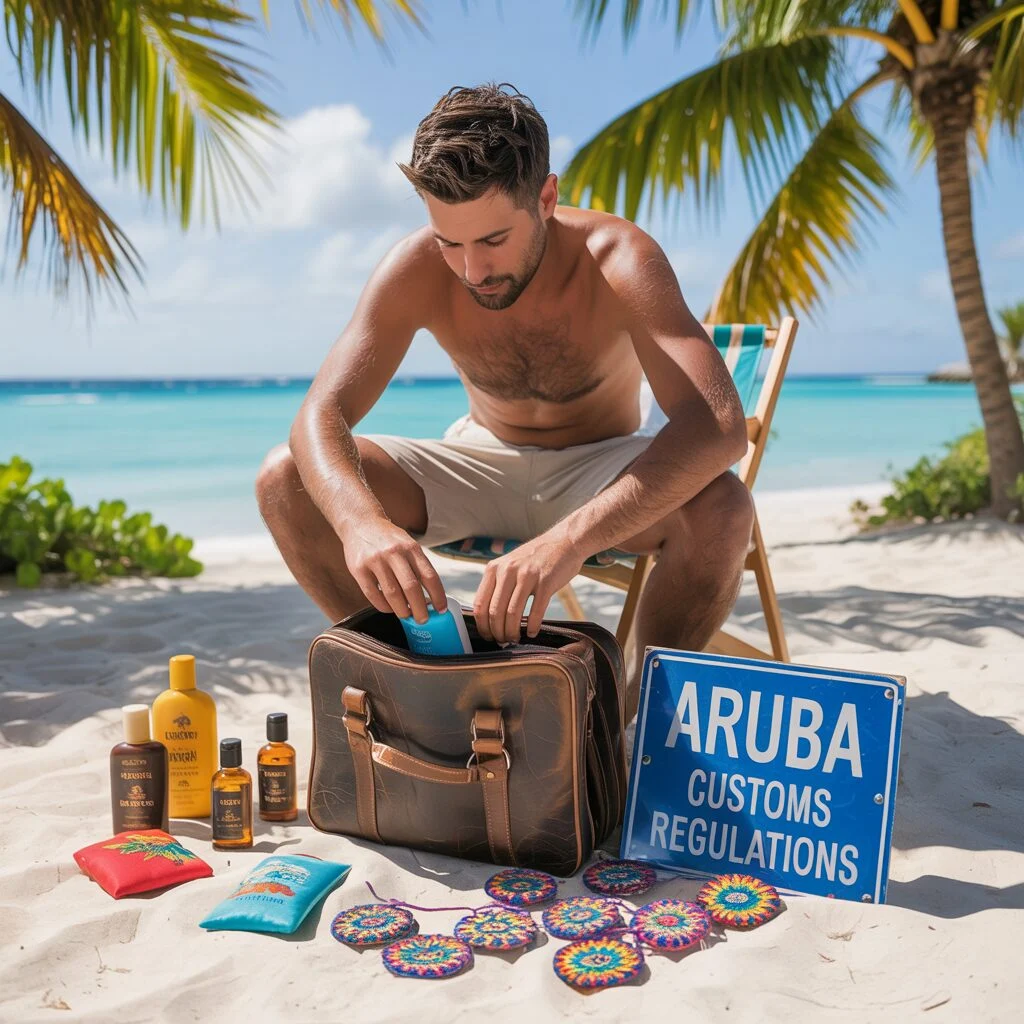
Removing coral, seashells (including conch shells), and white sand from beaches is illegal as these elements are vital to the ecosystem. Taking even found shells constitutes a serious environmental crime resulting in heavy airport fines.
What Are the Penalties for Customs Violations?
Non-compliance with customs regulations results in:
- confiscation of items without compensation,
- substantial monetary fines,
- criminal prosecution with potential imprisonment for serious offenses like drug trafficking or weapon smuggling.